
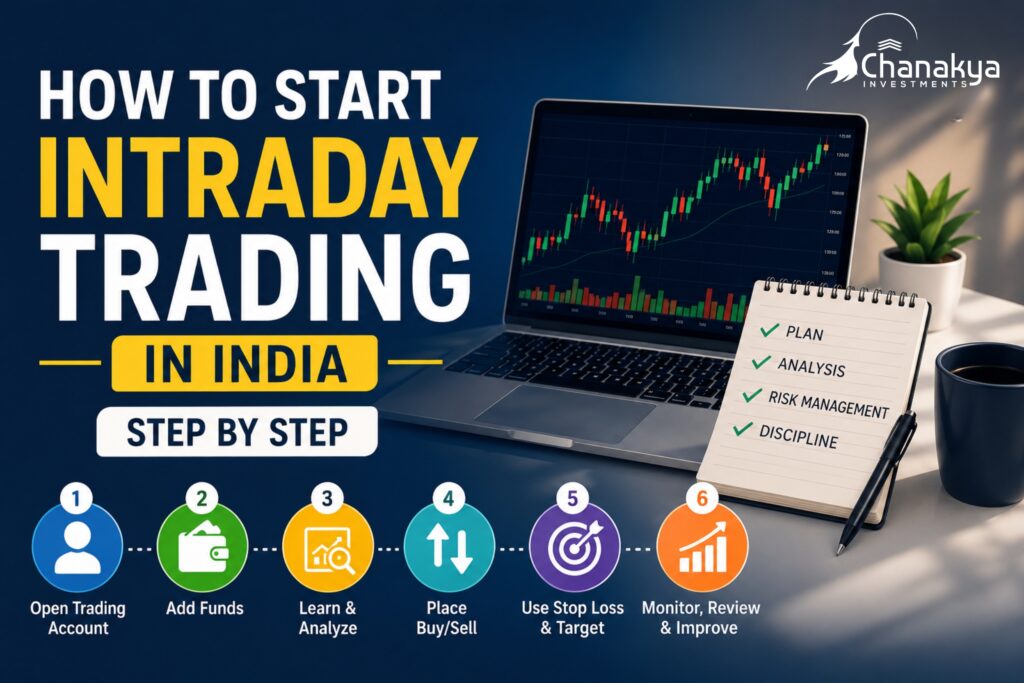
Intraday trading in india refers to the trading of stocks in the stock market on the same trading day itself. The main objective here is to cash in on small price movements and close out all positions in the stock before the end of the trading day.
Over the past few years, many Indians have explored trading opportunities because of easy access to online platforms, trading applications via mobile phones, and increasing awareness of financial markets. College students, working professionals, and beginners interested in learning about day trading in India are many.
But intraday trading in india is not simply the buying and selling of stocks. There should be adequate knowledge and proper risk management. This is the reason why many beginners prefer an Intraday Trading Course in India to get started with the basics prior to entering the market.
What Is Intraday Trading?
Intraday trading in india refers to the buying and selling of a stock on the same trading day. Traders make profits by taking advantage of small price movements in the stock market and not holding stocks for many months or years.
If you purchase stocks of any company at ₹500 in the morning and sell them for ₹510 at the end of the trading day, then you would make a profit of ₹10 per share (neglecting the charges).
Intraday trading is not the same as investing.
Investing vs Intraday Trading
| Investing | Intraday Trading |
| Long-term approach | Short-term approach |
| Hold stocks for months or years | Close positions on the same day |
| Focus on company growth | Focus on price movements |
| Lower daily activity | Active monitoring required |
Profits and losses occur very quickly in intraday trading, as there are price fluctuations in stocks on a minute-to-minute basis.
Why Do Beginners Opt For Intraday Trading in India?
There are various reasons why beginners opt for day trading in India.
The ability to trade from home or even anywhere using a smartphone.
- Getting exposure to the stock market movement.
- Get an opportunity to learn the behavior and the trends in the market.
- Get the latest trading platforms and charting tools.
- Get the chance to earn returns from the short-term market movement.
Though the opportunities are plenty, patience and proper preparation are the two things that you will need.
Step 1 – Learn the Basics Before You Trade
Before making your first trade in the stock market, spend time and learn how the stock market works.
Understand the concept of:
- Market order
- Limit order
- Bid and ask price
- Stop loss
- Technical analysis
- Risk management
Trying to make a trade without knowing these basics can make you incur unnecessary losses.
Why An Intraday Trading Course in India Is Important
Going through an Intraday Trading Course in India helps beginners learn the right things in a proper manner.
Advantages:
- Proper learning step-by-step
- Understanding of stock charts
- Learn risk management techniques
- Do not make common mistakes made by beginners
- Build trading discipline
Educational organizations such as Chanakya Investments make it easy for beginners to understand various concepts of the stock market and trading.
Step 2 – Get Your Demat and Trading Account
Both the Demat account and trading account are needed to trade in the stock market.
What is a Demat Account?
A Demat account holds the shares in electronic form. This is similar to having a digital locker for the securities.
What is a Trading Account?
With a trading account, you can buy and sell stocks in stock markets such as the NSE and the BSE.
Required Documents
Generally, most brokers require:
- PAN Card
- Aadhaar Card
- Bank details
- Mobile Number
- E-mail ID
- Photograph (passport-sized)
Account Opening Procedure
- Choose a registered broker.
- Do online KYC verification.
- Submit required documents.
- Link your bank account.
- Activate your account.
The whole procedure will be completed within a few days.
Step 3 – Knowing About NSE and Market Timings
The National Stock Exchange (NSE) is one of India’s biggest stock exchanges.
The usual market timings for Equity trading are:
- Market Opening: 9:15 AM
- Market Closing: 3:30 PM
Intraday Tips NSE that every beginner must know
The following are some essential Intraday Tips NSE that every trader at NSE should keep in mind:
First Hour Volatility
The first hour after market opening may experience volatility. Beginner traders should be careful in this regard.
Liquidity Focus
Liquid stocks have a good number of buyers as well as sellers. So they offer easy entry and exit to traders.
Trading Volume
Volume tells us about the activity of a stock. High volume means high trading activity.
Market Sentiment
Market sentiments are influenced by global news, events, and economic announcements.
Step 4 – Learning to Read the Stock Charts
Stock charts help traders understand the price movement and look for trading opportunities.
Candlestick Charts
Candlestick charts display:
- Opening Price
- Closing Price
- Highest Price
- Lowest Price
They are considered one of the most common tools used in technical analysis.
Support and Resistance
- Support – It’s a price level where the buying interest is expected to increase.
- Resistance – It’s a price level where the selling pressure increases.
Trends
The stock may move in any of the following three ways:
- Up-trend
- Down-trend
- Side-way trend
It helps the traders to make better decisions.
Volume Indicators
The volume helps to confirm whether there is enough market participation behind a particular price movement or not. The rising price along with rising volume may indicate strong market participation.
Step 5 – Selection of Suitable Stocks for Intraday Trading
Selection of stocks is one of the key aspects of intraday trading.
Following are some important things to consider while selecting stocks:
High Liquidity Stocks
These stocks give traders quick buying and selling without affecting the price much.
High Volume Stocks
High-volume stocks may give better trading opportunities.
Sector Movers
Sectors that are actively performing, like banking, IT, energy, etc.
Avoid Low-Volume Stocks
Low-volume stocks may come with wide price spreads and may give difficult exits for the traders.
Many traders make a watch list of intraday stocks every day before the market opens.
Step 6 – Making a Trading Strategy
It gives traders a pre-defined strategy to enter and exit trades.
Momentum Trading
A momentum trading strategy involves buying stocks with momentum in one direction.
Breakout Trading
A breakout takes place when a stock breaks a particular resistance level or support level.
Trend Following Strategy
It involves following the direction of the current trend.
Most of the beginners find it easy to follow a trend strategy as it helps them avoid going against the market momentum.
Irrespective of the strategy, always define your entry, target, and stop losses before entering into a trade.
Step 7 – Always Use a Stop Loss Order
The stop-loss order is one of the most effective tools of risk management.
Why stop loss is important?
- It protects the trading capital.
- It helps to avoid emotional decision-making.
- It gives discipline to the traders.
Risk Reward Ratio
One of the common strategies is to risk ₹1 in order to earn ₹2 or more.
Some common mistakes include:
- Keeping stop-loss orders far away from the entry price.
- Trading without any stop losses.
- Taking too much risk in one trade.
Protecting the capital is the first priority of every trader.
Step 8 – Start Small and Practice
Practice with Paper Trading
Paper trading enables practicing with no risks attached.
Use Small Amounts of Capital when Trading
Learn with small trading volumes.
Gradual Increase in Trading Consistency
Focus on consistent performance rather than making gains as soon as possible.
Keep Trading Journal
- Note down:
- Entry price
- Exit price
- Gain/Loss
- Reasons for Making the Trade
Constant review of your trades will assist in improving decision-making skills.
Mistakes Commonly Made by Intraday Traders New to the Market
Do not make these mistakes:
- Overtrading
- Trading without a strategy
- Ignoring stop loss
- Following the advice from social media blindly
- Emotional trading
- Trading with too much capital
The major cause of losses in trading is a lack of discipline, not market conditions.
Intraday Trading Tips NSE that Every Trader Must Know
- Only trade liquid stocks.
- Follow the trends in the market.
- Set realistic target levels.
- Always use the stop-loss feature.
- Avoid revenge trading.
- Maintain emotionality in check.
- Constantly review your trades.
The implementation of these simple steps can greatly improve consistency and decision-making.
Is the Intraday Trading Course in India Worth It?
To many novices out there, yes.
A good Intraday Trading Course in India can help traders:
- Learn faster
- Understand market discipline
- Avoid beginner mistakes
- Chart reading skills
- Practical market knowledge
Through education rather than learning through trial and error, traders can be guided to become better traders.
Educational providers such as Chanakya Investments teach prospective traders the concepts of trading, risk management, and market behavior through education.
Intraday Trading Checklist for Beginners
| Task | Status |
| Trading account ready | ✓ |
| Stock selected | ✓ |
| Stop loss set | ✓ |
| Risk calculated | ✓ |
| Strategy prepared | ✓ |
| Exit plan prepared | ✓ |
Check this list before every trade to maintain discipline.
Conclusion
Intraday trading in India is a process that starts with learning and preparation. Learn all the basics, open a trading and Demat accounts, understand NSE trading, read stock charts, select suitable stocks for your trades, prepare your trading strategies, and at all times focus on risk management.
Whether you are considering Intraday Trading in India opportunities for the first time or looking for an Intraday Guide, it is important to note that consistency and discipline come before seeking fast gains.
A good Intraday Trading Course in India can help traders develop knowledge and confidence.
FAQ
What is intraday trading?
Intraday trading is the trading of stocks on the same trading day. The trader closes all positions at the end of the trading day.
How much money is required to start intraday trading in India?
No specific amount is needed. Many new traders begin with small amounts of capital and then slowly increase trading volumes as their experience grows.
Is intraday trading risky?
Yes. Due to rapid changes in prices, losses can arise within a short period. It is necessary to use stop-loss and proper risk management.
Can beginners start day trading in India?
Yes. Beginners can start day trading in India, but first, they must learn all the basic principles.
What is the best Intraday Trading Course in India?
The best Intraday Trading Course in India is a course that emphasizes practical learning, risk management, chart analysis, and trading discipline, but is comprehensible to beginners.
Which stocks are best for intraday trading?
Highly liquid and actively traded stocks are preferable since there are better opportunities to enter and exit.
What are the most helpful Intraday Tips NSE beginners should know?
Some of the most useful Intraday Tips NSE traders should know are using stop loss, trading liquid stocks, following market trends, risk management, and avoiding emotions.
How long does it take to learn intraday trading?
The duration to learn intraday trading differs from person to person. Most traders spend several months understanding the basics of technical analysis, market trends, and trading psychology.ts.